
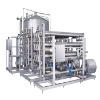

Bioreactor
Classification of Animal Cell Bioreactors
Time:2018.03.15
Whether or not the animal cell culture technology can be industrialized and commercialized on a large scale depends on whether a suitable bioreactor can be designed. Due to the great difference between animal cells and microbial cells, traditional microbial reactors are obviously not suitable for large-scale cultivation of animal cells. Firstly, it must satisfy the low shear stress and good mixing conditions to provide sufficient oxygen for cell growth and cell product synthesis.
At present, animal cell cultivation which use the bio-reactor include: Rotary Bottle Incubator, Plastic bag breeder, Packed Bed Reactor, multilayer board reactor,
Spiral membrane reactor, tubular spiral reactor, ceramic rectangular channel honeycomb reactor, fluidized bed reactor, hollow fiber and other membrane reactors, stirred reactor, airlift reactor, etc.
These reactions can be divided into three categories according to the different way they cultivate cells:
1. Reactors for suspension culture: such as stirred reactors, hollow fiber reactors, ceramic rectangular channel honeycomb reactors, airlift reactors.
2. Adherent culture reactor: such as stirred reactor (microcarrier culture), glass bead bed reactor, hollow fiber reactors, ceramic rectangular channel honeycomb reactors.
3. Embedding culture reactor: such as fluidized bed reactor, solidified bed reactor.
At present, animal cell cultivation which use the bio-reactor include: Rotary Bottle Incubator, Plastic bag breeder, Packed Bed Reactor, multilayer board reactor,
Spiral membrane reactor, tubular spiral reactor, ceramic rectangular channel honeycomb reactor, fluidized bed reactor, hollow fiber and other membrane reactors, stirred reactor, airlift reactor, etc.
These reactions can be divided into three categories according to the different way they cultivate cells:
1. Reactors for suspension culture: such as stirred reactors, hollow fiber reactors, ceramic rectangular channel honeycomb reactors, airlift reactors.
2. Adherent culture reactor: such as stirred reactor (microcarrier culture), glass bead bed reactor, hollow fiber reactors, ceramic rectangular channel honeycomb reactors.
3. Embedding culture reactor: such as fluidized bed reactor, solidified bed reactor.
Culture Comparison of Animal and Plant and Microbial Cells
| Microorganism | Animal Cell | Plant Cell | |
| Size (Diameter, μm) | 1-10 | 10-100 | 10-100 |
| Suspended Growth | Can | Most cells need to adhere to the surface to grow | Can, but easy to cluster, no single cell |
| Nutrition Requirements | Simple | Very complicated | Relatively complex |
| Growth Rate | Fast, doubling time 0.5-5 hours | Slow, doubling time 15-100 hours | Slow, doubling time 24-74 hours |
| Metabolic Regulation | Interior | Interior, hormone | Interior, hormone |
| Environmental Sensitivity | Insensitive | Very sensitive | Can tolerate a wide range |
| Cell Differentiation | No | Exist | Exist |
| Shear Stress Sensitivity | Low | Very High | High |
| Traditional variation, screening technology | Widely used | Not often used | Sometimes used |
| Concentration of cells or products | Relatively high | Low | Low |