
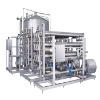

Spray Dryer
Overview of Flue Gas Desulfurization Technology
Time:2018.03.22
In order to control the deteriorating atmospheric environment, it is imperative to control the emission of SO2. China has conducted research and application of various desulphurization technologies. Coal-fired desulfurization can be divided into three categories according to specific conditions: desulfurization before combustion, desulfurization during combustion, and post-combustion desulfurization.
Desulfurization before combustion
Pre-combustion desulfurization methods include mechanical desulfurization, chemical desulfurization, electromagnetic desulfurization, bacterial desulfurization, and ultrasonic desulfurization.
Mechanical desulfurization method has been applied in practice, such as jigger desulfurization, flotation machine desulfurization, shaker desulfurization, cyclone desulfurization, spiral concentrator desulfurization. Mechanical desulfurization is based on the fact that sulfur compounds such as iron sulfide and sulfur (FeS2) in coal are different from the specific gravity of coal. The desulfurization efficiency of this method depends on the particle size of FeS2 and other substances and the content of inorganic sulfur in coal. The washing method cannot remove organic sulfur and fine iron sulfide sulfur in coal.
Chemical methods, pyrolysis of coal and hydropyrolysis of desulfurization are based on the fact that the chemical bonds Fe-S and CS present in sulfur in raw coal are unstable compared to CC and easily decompose under pyrolysis conditions to generate gaseous sulfide H2S or CaS. Pyrolysis and hydropyrolysis of coal use this feature to remove sulfur from coal.
The electrochemical method utilizes the electrochemical oxidation and reduction reactions of coal in the electrolytic cell to oxidize the pyrite and organic sulfur in the coal into soluble sulfides or reduce and hydrogenate the coal to achieve the desulfurization effect.
The biological desulfurization technology utilizes the oxidizing action of the microbes and the iron and sulfur compounds to decompose the pyrite. The bacteria act to oxidize Fe2+ to Fe3+, and the elemental sulfur is oxidized to sulfuric acid due to the action of bacteria. The process has not yet obtained large-scale applications. However, with the breakthrough in the development of biotechnology, the process has good prospects for development.
The microwave method is desulfurization due to the microwave energy to stimulate the sulfide in the coal to react with the extractant.
Desulfurization in combustion
Desulfurization during combustion and post-combustion desulfurization, ie, flue gas desulfurization, are generally achieved by adding desulfurizers in the combustion chamber and in the tail flue. The desulfurization during combustion is in the high temperature atmosphere produced by the combustion. The desulfurizer chemically reacts with the SO2 gas molecules. Therefore, the desulfurization in the combustion is completed together with the fuel combustion. The desulfurization in combustion generally uses limestone (the main component is CaCO3) as a desulfurizing agent, and crushes it into suitable particles and then sprays it into the boiler. CaCO3 is decomposed into CaO and CO2 at high temperature, and SO2 in the flue gas reacts with CaO to complete SO2. The absorption process in the furnace: if in the reducing atmosphere, lime or limestone will react with the H2S produced by the combustion of the coal to form CaS, which will be oxidized to CaSO4 in case of oxygen. Limestone generally obtains the highest desulfurization efficiency at 800-850° C. When the furnace temperature is higher than 1200° C., CaS04 generated will decompose to SO 2 , resulting in unsatisfactory desulfurization effect. The best combustion method for adding limestone into the furnace is the fluidized bed combustion technology (CFBC). It is only necessary to inject limestone directly during the combustion process. This investment in process equipment and operating costs is very low. When Ca/S is 2, the sulfur-fixing rate can reach over 70%.
Desulfurization after combustion
Desulfurization before combustion
Pre-combustion desulfurization methods include mechanical desulfurization, chemical desulfurization, electromagnetic desulfurization, bacterial desulfurization, and ultrasonic desulfurization.
Mechanical desulfurization method has been applied in practice, such as jigger desulfurization, flotation machine desulfurization, shaker desulfurization, cyclone desulfurization, spiral concentrator desulfurization. Mechanical desulfurization is based on the fact that sulfur compounds such as iron sulfide and sulfur (FeS2) in coal are different from the specific gravity of coal. The desulfurization efficiency of this method depends on the particle size of FeS2 and other substances and the content of inorganic sulfur in coal. The washing method cannot remove organic sulfur and fine iron sulfide sulfur in coal.
Chemical methods, pyrolysis of coal and hydropyrolysis of desulfurization are based on the fact that the chemical bonds Fe-S and CS present in sulfur in raw coal are unstable compared to CC and easily decompose under pyrolysis conditions to generate gaseous sulfide H2S or CaS. Pyrolysis and hydropyrolysis of coal use this feature to remove sulfur from coal.
The electrochemical method utilizes the electrochemical oxidation and reduction reactions of coal in the electrolytic cell to oxidize the pyrite and organic sulfur in the coal into soluble sulfides or reduce and hydrogenate the coal to achieve the desulfurization effect.
The biological desulfurization technology utilizes the oxidizing action of the microbes and the iron and sulfur compounds to decompose the pyrite. The bacteria act to oxidize Fe2+ to Fe3+, and the elemental sulfur is oxidized to sulfuric acid due to the action of bacteria. The process has not yet obtained large-scale applications. However, with the breakthrough in the development of biotechnology, the process has good prospects for development.
The microwave method is desulfurization due to the microwave energy to stimulate the sulfide in the coal to react with the extractant.
Desulfurization in combustion
Desulfurization during combustion and post-combustion desulfurization, ie, flue gas desulfurization, are generally achieved by adding desulfurizers in the combustion chamber and in the tail flue. The desulfurization during combustion is in the high temperature atmosphere produced by the combustion. The desulfurizer chemically reacts with the SO2 gas molecules. Therefore, the desulfurization in the combustion is completed together with the fuel combustion. The desulfurization in combustion generally uses limestone (the main component is CaCO3) as a desulfurizing agent, and crushes it into suitable particles and then sprays it into the boiler. CaCO3 is decomposed into CaO and CO2 at high temperature, and SO2 in the flue gas reacts with CaO to complete SO2. The absorption process in the furnace: if in the reducing atmosphere, lime or limestone will react with the H2S produced by the combustion of the coal to form CaS, which will be oxidized to CaSO4 in case of oxygen. Limestone generally obtains the highest desulfurization efficiency at 800-850° C. When the furnace temperature is higher than 1200° C., CaS04 generated will decompose to SO 2 , resulting in unsatisfactory desulfurization effect. The best combustion method for adding limestone into the furnace is the fluidized bed combustion technology (CFBC). It is only necessary to inject limestone directly during the combustion process. This investment in process equipment and operating costs is very low. When Ca/S is 2, the sulfur-fixing rate can reach over 70%.
Desulfurization after combustion